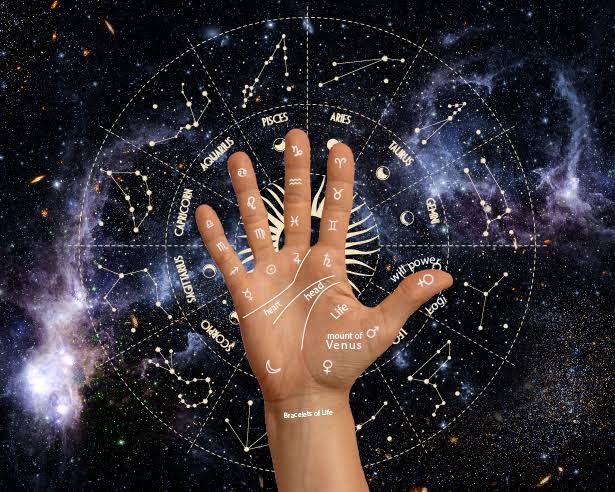
- Ancient Practice: Palmistry has ancient roots and has been practiced in various cultures worldwide for centuries. It is based on the belief that the lines and features of the palm can reveal information about an individual’s life and character.
- Lines on the Palm:
- Heart Line: Represents emotions, relationships, and matters of the heart.
- Head Line: Reflects intellect, learning, and thought processes.
- Life Line: Often associated with vitality, health, and life experiences.
- Fate Line: Relates to destiny, career path, and life’s journey.
- Mounts: The mounts are raised areas of the palm associated with different planets in palmistry. They are linked to various personality traits and characteristics.
- Fingers and Their Lengths: The length and shape of fingers are also considered in palmistry. It is believed that each finger corresponds to different aspects of personality, such as communication, creativity, and analytical abilities.
- Thumb: The thumb is considered significant in palmistry and is associated with willpower, drive, and individuality.
- Interpretation and Readings: Palm readers interpret the combination of lines, mounts, and features to provide insights into an individual’s past, present, and potential future. While some focus on character analysis, others may delve into predictions related to career, relationships, and life events.
- Limitations: Palmistry is not considered a predictive science and is more about interpretation and introspection. Different palmists may have varying interpretations of the same palm features.
- Cultural Variations: Different cultures have unique approaches to palmistry. While some traditions emphasize specific lines and features, others may interpret the palms more holistically.
- Personal Exploration: Many people engage in palm reading out of curiosity or as a form of self-reflection. Some see it as a tool for gaining insights into their strengths, challenges, and potential paths in life.
- Entertainment vs. Serious Practice: While some individuals take palmistry seriously and consider it a form of divination, others view it as a form of entertainment or a fun activity at events and parties.